My Interview With Homeland Security

So since it looks like I’ll be traveling quite a bit in the foreseeable future, I thought it might be an idea to register with Homeland Security’s  trusted-traveler program and thus avoid the hassle and long lines at airport security.   Which is how come I turned up yesterday at SeaTac’s US Customs and Border Protection office for my interview.

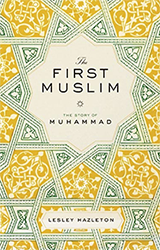
I did kind of wonder how it might go in light of the fact that The First Muslim has just been published.  What would Homeland Security make of this?  Should I even mention it?  Were they likely to make a biographer of Muhammad a trusted traveler, or would stereotype win the day so that the subject alone would set off alarms in the bureaucratic mind?  There was only one way to find out.

The interview didn’t start off on quite the right note.

“Sorry to hear about Margaret Thatcher’s passing,” said the Customs and Borders officer when I told him that I had a British passport as well as an American one.

“I can’t say I am,” I replied before I could bite my tongue.  “Not least because my father was a doctor in the National Health Service, which she did her best to dismantle.”

“Sorry,” he said, “I shouldn’t make assumptions.”

And with that he had my interest.  I hadn’t expected that apology.

“You’re a writer?” he said.  “What do you write about?”

“Religion and politics.”  And with that I had his interest.

“Big subject!” he said.

“Which you could say is why we’re here in this office right now,” I replied.

We both smiled kind of ruefully.

He pulled up the US customs record of my travels.  “So you focus on the Middle East?”

“Of course.  It’s where all three of the major monotheisms began, and it’s where religion and politics are most intricately intertwined.”

“Isn’t that so,” he said.  “In fact that’s what I studied.”  Turns out he’d majored in Middle East history — specifically the 1920s to the 1940s. “The Brits seem to have had a lot to do with creating today’s Middle East.”

“With a little help from the French, true,” I said. “They have a lot to answer for.  As do we, especially since we went marching into Iraq with no idea of what was really happening there…”  Oh god, what was I saying to an official of the US government?

Yet he was nodding, though whether in agreement or in acknowledgment of my hopelessly liberal point of view wasn’t clear until he said:  “We all need to know much more history.”

And that was my cue.  I reached into my pocket and handed him my card — the one with the cover of The First Muslim on the front.  “This might help some,” I said.

He studied it a moment, and then: “Interesting!  Thank you.  I have to read this.”

The next thing I knew he was taking my photograph and my fingerprints (on a neat little machine glowing with green light), explaining the intricacies of how to use my newly approved trusted-traveler status, and giving me his card.

As I picked up a coffee before wandering out of the airport, it occurred to me to ask why I was surprised at how relaxed and sensible the interview had been.

Partly, I think, we’re so used to inane encounters with low-level TSA contract employees in the security lines that it’s easy to forget that there actually are intelligent people higher up the line.

Partly,  as an immigrant to the US, my experience years ago of dealing with another branch of what is now Homeland Security, namely the Immigration and Naturalization Service, had been downright Kafkaesque.  (In fact I’d have said that the INS officials I encountered then had deliberately out-Kafkaed Kafka, except that I knew they’d never even heard of him.)

And partly too, of course, there’s the Orwellian Big Brother aspect of Homeland Security — the awareness that one way or another, we are all, however innocent, under surveillance.

That may be one more thing the Brits, among others, have to answer for.

The Battle of the Muhammad Movies

Coming soon to a screen near you:  not one but two biopics about the life of Muhammad.  One from Iran, one from Qatar.  In other words:  one Shia, one Sunni.

Oy.

And double oy.  Because how do you make a movie about someone you can’t show on the screen?  Images of Muhammad are a no-no in Islam.  Though a few medieval Persian miniatures do show his cloaked figure, his face is blanked out — a white oval in the otherwise vividly colored painting.

quinnNo surprise, then, that there hasn’t been a feature movie about Muhammad since 1976, when Libya’s Muammar Qaddafi — yes, that Qaddafi — funded “The Message,” starring Anthony Quinn (shown here at left) as Muhammad’s uncle Hamza.

Who played Muhammad?  Nobody.  The solution was not to show him at all.  Instead, the camera acted as his eyes.  When the camera panned, you were supposed to think that this was what Muhammad was seeing.  The result was… less than convincing.

What was all too convincing was the violence surrounding the movie’s planned US debut in 1977.  Twelve Nation of Islam extremists not given to fact-checking heard a rumor that Quinn had played not Hamza, but Muhammad himself.  They laid siege to three buildings in Washington DC, where they held 149 hostages and killed a journalist and a police officer until they were persuaded by the combined efforts of the Egyptian, Pakistani, and Iranian ambassadors to surrender.  (The whole miserable story is here.)

Of course the hostage-takers hadn’t seen the movie.  If they had, they might have been amazed by its stereotypical blandness.  And they’d never be aware of their ironic role in ensuring that the director, Moustapha Akkad, gave up on religious-themed movies after “The Message,” made a small fortune directing Jamie Lee Curtis in the famed “Halloween” sequels, and then in 2005 went to a wedding in Jordan and got blown up by a suicide bomber.

If it seems way past time that a better film about Muhammad be made, the question remains how it can be done without violence.  And the problem remains of how to do it without showing him.

The highly regarded Iranian director Majid Majidi (“Children of Heaven,” “Color of Paradise”) began work on his $30-million movie last October, and reportedly intends to show Muhammad’s cloaked figure, but not his face.  In short order, an outraged denunciation came from Cairo’s al-Azhar University, followed by the announcement of plans for a rival movie from Sunni-majority Qatar,  with the blessing of a top Muslim Brotherhood theologian and a budget ranging, in various reports, from $200 million to $1 billion.

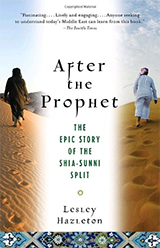
So how will the two movies differ, aside from the obvious lavishness of production moola and the issue of cloaked figure or no figure?  If you’ve read After the Prophet, you’ll know that the Iranian movie will likely give a far greater role to Muhammad’s cousin and son-in-law Ali, whom Shia believe Muhammad designated as his successor — his first khalifa, or caliph.  The Qatari movie will just as likely give a heftier role to Muhammad’s father-in-law abu-Bakr, who in fact became the first caliph of Sunni Islam.  In other words, the two movies are likely to act out the Sunni-Shia split.

I guess acting it out with cameras is far preferable to doing so with guns, but the risk of course is that angry denunciations such as that of al-Azhar will only encourage the latter.

croweMeanwhile, Hollywood seems determined not to be left out of the prophets (and, of course, the profits).  Two biopics of Moses are reportedly in the works, with names like Steven Spielberg, Ridley Scott, and Ang Lee being bandied around with Hollywood abandon and zero confirmation.  And gird your loins for a biopic of Noah due for release next year, with the ark-builder being played by the star of “The Gladiator,” Russell Crowe.

Somehow I can’t quite imagine Russell Crowe with an olive branch…

Pope Goes The Weasel

That headline isn’t mine — it’s courtesy of Stephen Colbert, the Comedy Central host of The Colbert Report, and a practicing Catholic.  His word for Ratzinger/Benedict’s resignation: “popectomy.”

I find myself in the same bind as Colbert.  It seems like I should have all sorts of incredibly pertinent things to say about Ratzi’s helicoptering off into the twilight, but the papacy has become so impertinent that the only real question that concerns me is this:

What happens to the nifty red shoes?

redshoesPrada shoes, they say.  Ratzi’s favorites.  To be left behind as he he now declares himself just “a humble pilgrim.”  (Gagging sounds heard offstage.)

How humble?  Well, since he’s said he’ll live out his remaining days “hidden from the world,” I’m assuming he means “hidden” in the same sense as the Mahdi, the messiah figure of Shiism, who disappeared into a cave twelve centuries ago and who will return at the end of days.

Of course Ratzi has to give up the red shoes.  Who could hide in red shoes?

Especially since he has such a lot to hide from.

What’s really puzzling is that anyone still takes the papacy seriously.  The media are hyping up the election of a new pope for obvious reasons.  Men in fancy dress, an electoral race, cloaked ambition, secret balloting, colored smoke — it all makes for good theater.  The fact that so many of those involved in all this are deeply corrupt gives an extra thrill to it all.  Whether it’s actual pedophilia or “merely” covering it up;  closet homosexuality by public homophobes;  unveiled misogyny displayed in the inquisition of nuns;  plummeting numbers of priests unable to marry a woman, let alone a man;  and now, a secret report on a sex and blackmail scandal within the Vatican walls — how could the media resist such a totally sick soap opera?

What we’re seeing is a huge fundamentalist institution deep into the process of self-destruction.  It’s imploding right in front of us.  The weasel has definitely popped, and the infallible is about as fallible as it can get.

If the Roman Catholic church doesn’t undergo thorough reform, right now, predicts the famed Swiss theologian Hans Kung, it will “fall into a new ice age and run the danger of shrinking into an increasingly irrelevant sect.”  He cites a recent poll in Germany showing that 85% of Catholics support marriage for priests, and 75% support ordination of women.

Religious historian Garry Wills’ new book Why Priests? – A Failed Tradition goes further and advocates abolishing the priesthood altogether.  Not only did Christianity begin without a priesthood, he points out, but it actively opposed it.  And rank-and-file priests are speaking up too, like Tony Flannery in Dublin, suspended by the Vatican for refusing to adhere to church orthodoxy on contraception and homosexuality, or Roy Bourgeois in the US, who was excommunicated for supporting the ordination of women.

But all this is far too pertinent.  So let’s take refuge in the impertinent and get back to the issue at hand:  what’ll happen to those hand-made red shoes?  Will they be bronzed like baby booties?  Will they be displayed in an air-conditioned glass relics case?   Will they be auctioned off on eBay?

Fundamentalists of all religious stripes, take note:  this is how imposed orthodoxy ends — not with a bang, but with a red-bootied whimper.

What Happens When We Eat Together

Let me say this upfront:  I’m lousy at interfaith gatherings.  They tend to have an oddly stilted feel.  There’s something of Tarzan and Jane about them: “Me Jew, you Muslim, we friends.”  Far better, I’ve long thought, to get together on a small scale, over the dinner table.  Cook together, break bread together, drink together, and allow the conversation to develop without that weirdly over-determined self-consciousness.

That’s part of what so impressed me in the response of New Zealanders Khayreyah Amani Wahaab and her husband Jason Kennedy to an Islamophobic rant (Muslims shouldn’t be allowed on airplanes, etc) by Richard Prosser, a New Zealand member of parliament:  as I reported here, they invited him to dinner.

And he came to dinner.  Here’s Khayreyah’s post on it last night on her Facebook page:

Tandoori-Chicken3Mr Richard Prosser has just left our house after having a lovely dinner of home-cooked tandoori chicken, salad and roti with raitha. He was very realistic about owning the words he said, but was very clear that whilst he is never going to apologize to terrorists, he is very apologetic and contrite about the hurt and whatever damage he has caused the rest of the Muslim community. He understands, accepts and recognises that the vast majority of Muslims are not terrorist types and have the same fears, values and aspirations that he does.

We both agreed that aviation security is a wider issue that does need to be addressed [Kahyreyrah has a degree in aviation management -- LH], as well as that of Muslims having a louder voice in condemning extremists and their actions. Jason and I both thanked him in the end, since if it wasn’t for his brash words written in a news column, then we would not have identified these needs, that ultimately will benefit the entirety of New Zealand. All three of us are willing to forge a way forward for Muslims in New Zealand in order to make it a happier, safer place, and leading the world in Islamic – Western relations.

Richard did say, interestingly, that of all the mail, comments etc he received from people following the article, our letter by far made him feel worse than all the others. He finds himself to be a person who can deal with anger and resentment being directed towards him but felt out of place dealing with outreach born of love and a desire for understanding. Ultimately both sides agreed that we need to see each other as a whole and not just what the media had chosen to portray, that we cannot expect fair judgement if only one facet of ourselves are exposed to said judgement. We ended the night with a short TedX video of Lesley Hazleton’s talk about being a tourist in the Quran and we promised to have future interactions with a view to improving NZ as a whole. — with Jason Kennedy

Glad to have played a small supporting role.

New Q & A on Muhammad

Up on the innovative new e-book site Zola Books, this Q and A with me.  They asked such great questions!
Here’s the intro and the full interview:

Though the fastest growing religion in the world, Islam is deeply misunderstood by many—including some of its most ardent believers. In her new biography of Muhammad, The First Muslim, award-winning author and former foreign correspondent Lesley Hazleton portrays Islam’s founder as a rebel, a defender of women’s equality, and, above all, a human being. In this Zola Q&A, Hazleton discusses how Muhammad’s world forged his identity and what he might think of the Middle East today.


What inspired you to take on Muhammad as a subject? There’s been so much written about him. Did you think there was still something missing?

Yes: Muhammad himself! You’re right, there’ve been millions of words written about him, but the more of them I plowed through (I read several biographies as background research for my previous book, After the Prophet), the less I had any real sense of the actual man. It was like looking through a telescope the wrong way round: he seemed to be reduced to a two-dimensional cipher by this mass of verbiage. Much of it was devotional, the rest of it kind of cautiously dutiful, and even soporific. How could anyone do that to such a remarkable life? I wanted the vitality of a real life lived. I wanted to see him whole—not as a symbol, but as a multi-dimensional human being.

The book looks closely at the physical world he occupied – the nights on Mount Hira, watering goats in the desert, his feelings of confinement in Mecca as a boy. Did you visit all these places?

I would have, but non-Muslims aren’t allowed in either Mecca or Medina. And besides, there’s hardly anything left of what these cities once were; nearly everything’s been built up and covered over. But I had the advantage of a strong feel for the landscape and culture of the Middle East. I was based in Jerusalem for thirteen years, spent a year with Beduin in the Sinai desert, and have roamed freely around both Egypt and Jordan. And yes, I’ve spent nights alone on top of another sacred mountain not that far from Mecca: Mount Sinai.

You take odds with the conservative Islamic view that Muhammad was destined to be the messenger of God. Do you have any concerns as to how conservative Muslims will react to this book?

True, I don’t see his life as a matter of foreordained destiny, but as an extraordinary human struggle for dignity and social justice. I think it’s clear from the tone of the book that it’s written with respect for its subject. I mean, isn’t that the point of good biography? Respect for the integrity of a full life lived? For the integrity of reality? Of course the way I see things conflicts in places with the conservative Muslim view, which is sometimes more devotional than historical. But I think we’ve agreed to respectfully disagree.

What do you think are the most common misunderstandings about Muhammad that we have in the West?

There’s a ton of them, most of them politically manipulated, but let’s take just two. First, there’s the image of the lecherous polygamist. In fact his marriage to his first wife, Khadija, was a loving monogamous relationship that lasted twenty-four years until her death. Even after he later married nine other women—nearly all of them diplomatic alliances such as any leader made at the time—he openly mourned Khadija until his own death. And it’s striking that while he had four daughters with her, he had no children with any of the late-life wives.

Second, there’s the image of the militant sword-wielding warrior. In fact, Muhammad only took up arms after years of downright Gandhian passive resistance to increasing verbal and physical assault, culminating in a concerted attempt to assassinate him. And when he finally did so, under political pressure, he made it clear that as the Quran says, “forgiveness and mercy are more pleasing in the eyes of God.” Combat was permitted, that is, but to be avoided if at all possible.

The book points out that Muhammad might never have gone on to found Islam if not for the support and understanding of his wife Khadija, and Muhammad himself rejected the tradition that daughters were less valuable than sons. Yet women are often treated as far less than second-class citizens in many Islamic cultures. Why do these attitudes persist?

What happened to Islam after Muhammad’s death is what happened also with early Judaism and early Christianity. All three began as protest movements for social justice, but then fell prey to the seemingly endless human ability to mess things up. That is, they became institutionalized. Their radical roots were covered over with conservative dogma, and an all-male hierarchy imposed their version of “the Truth” (always with a capital T), forcing their cultural prejudices on everyone else. This is now changing rapidly in both Judaism and Christianity, popes and chief rabbis notwithstanding, and I think it is beginning to change in Islam too, ayatollahs and grand muftis notwithstanding.

What do you think Muhammad would make of the Middle East today?

Great question! Let’s start with Mecca itself: I don’t see how he’d be anything but totally dismayed. He’d be the first to point out that the Saudi regime is the modern equivalent of the wealthy elite who ran the city in his own time, profiting off piety and persecuting him for his message. If Muhammad were alive today, he’d probably be the Saudi kingdom’s worst nightmare, much as the real Jesus would be the Vatican’s worst nightmare.

But the Sauds don’t have the monopoly on the repressive use of conservative piety. Islamist fundamentalists claiming to speak in Muhammad’s name are currently fighting for political control in much of the Middle East. If he could speak for himself, then, here’s what I think he’d say:

He’d condemn sectarianism. He’d condemn extremism. He’d condemn suicide bombing and terrorism, and call them obscene. He’d say what the Quran says: “Let there be no compulsion in religion.” And he’d commit himself fully to the hard and thorny process of making peace.

Elephant + Waves = Joy

Forget cat and dog videos!  Elephant joy is where it’s at.

This has been making me smile all day:

Guess Who’s Coming To Dinner

When things seemed to be getting ever worse in the Middle East — as they always seemed to, and still do — we’d look at each other and say, wistfully, “There’s always New Zealand.”  New Zealand, for us, was the image of peacefulness, where nothing ugly ever happened.  We didn’t enquire too closely.

But of course even New Zealand has its bigots.  Like Richard Prosser, a Member of Parliament from the right-wing New Zealand First party, who two days ago published an ugly Islamophobic rant suggesting, among other things, that Muslims be banned from air travel.

So an Auckland Muslim sat down and wrote an open letter in response, and today it appeared in The New Zealand Herald.  I”m running it in full here because I’m bowled over by the wisdom and grace of it, and because it gets better and better as it goes on:

Dear Mr Prosser,

Unbeknown to myself, I am your enemy.

I consider this strange as I have never met you and harbour no ill will toward you. I am certain that if I walked past you on the street your suspicions would not be raised. If you were a customer in my shop I am certain you would not suspect that I pose your family any risk. For you see, I am Muslim, I am 30, and I am also white. Throw in the fact that I am an American expatriate – accent and all – and I possess quite the subterfuge. After all, I could sit next to you on a flight, our arms negotiating the armrest for space, and you would think nothing of it. And yet if between us the subject of religion arose, my reply would disable you with fear.

Or so your column would lead me to believe.

I am writing an open letter to you out of sympathy, respect, and the desire for understanding. I do not write this so publicly in order to give your opinions greater status than they deserve. Instead, I hope to circumvent your vitriol from tainting the views of other people who, through lack of personal experience with the Muslim community, may be susceptible to your very limited and ignorant view of our religion and families.

I will start by, ironically, providing you with some defence. It is absolutely your right to speak your mind freely with whatever opinions you so wish. That is one of the great liberties of this nation.

But let me be clear: speaking your mind is your right as a private citizen. As a Member of Parliament, you are a public servant, and your public opinions need to be more carefully delivered. You must be aware that the words of MPs are granted greater political legitimacy than those of private citizens.

It is frightening when someone with so much power to sway the opinions of others is so cavalier in his delivery. We entrust MPs to make defensible, rational, and sympathetic judgments in pursuit of the common good. Counter to this, your words seek to generate divisiveness by fostering an indefensible ‘us’ versus ‘them’ mentality.

Do you actually believe Muslims are so different to you that we should be trusted less than any other human being? Wherefore this presumption that those who commit terrible crimes in the name of Islam are actually considered heroes or true Muslims by the rest of us? Are we really so homologous to you? Woe to the Sikh or Hindu who you might accidentally recognise for a Muslim in your eagerness to incite fear, all the while I, the unrecognisable white Muslim, sits next to you.

For you see, if the subject of religion is never broached between us, you will feel safer the entire trip knowing you sit next to a safe and reliable Pakeha. Let me assure you, I want that plane to land safely just as much as you do. I have family and friends who I want to be around for a good long time, and so do they.

The only reason I can think that you would harbour such ill-sentiment is that you have very little first-hand experience with Muslims. I can relate. I was not born into a Muslim family. However, with age I came to recognise my beliefs were congruent with Islam. That seemed a bit of a scary prospect, as I am sure you can appreciate that there is a great deal of Islamophobia in the United States, as well.

Once I actually met some Kiwi Muslims, I quickly realised my presumptions were entirely inaccurate. Muslim culture is not some monolithic fiction. Muslims are just like the majority of Kiwis: we love our summer barbecues, we avidly follow the All Blacks’ domination of rugby, we wear jandals, we buy fish n’ chips down the road. You see, Muslims come from all different backgrounds. I was born in the US and descend from Irish stock. My wife was born in Fiji, and her Indian ancestors were relocated during the British slave trade. Many Kiwi Muslims are from India, the Middle East, east Africa, Indonesia, and Malaysia. We have all come here to share in what it means to be Kiwi. Between us we have a similar pathway to God, but we also respect that every non-Muslim is on their own pathway to God.

Your family and my family, we are each equally Kiwi, despite the fact that we may worship differently. We are equal to you in many other ways: my wife and I both happily pay the highest tax rate, our business creates revenue and employment for many New Zealanders, and our education benefits the New Zealand economy. We are even socially and politically active (gasp!).

If you think supporting terror is somehow intrinsic to Islam, or is somehow an inevitability of our religion, ask anyone in the Muslim community here: no one supports any act of violence or terror against any other living being, human or animal. That is what we call haram in Islam, which means “forbidden by God”. We have no support for terrorists who do such horrible things, and we cannot understand how they can call themselves Muslims. Their actions are entirely incompatible with Islam.

In order to establish better communication on this issue, my wife and I would like to invite you to dinner at our place the next time you are in Auckland. We would like to hear your story, and we would like to share ours. I believe that if you would grant us the pleasure of your company, it will give you a much more enlightened perspective on Muslims and Islam in general. I will leave my contact details with the editor if you wish to make good on our offer.

khayreyahTwo enemies who wish
to be your friends,
Jason (Naveed) Kennedy and
Khayreyah Wahaab

Update:  Prosser has accepted the invitation to dinner.  I’m sorely tempted to start a contest for suggestions as to what will be on the menu, but that wouldn’t do justice to the spirit of Jason Kennedy and Khayreyah Wahaab.  Talk about the better angels of our nature…!

Follow

Get every new post delivered to your Inbox.

Join 393 other followers